
The best Steam Deck games for battery life tend to be lightweight 2D games, turn-based titles, and games that remain comfortable at modest frame-rate limits. Balatro and Stardew Valley have the longest model-specific results on this list. Potion Permit, Afterimage, and Ooblets also offer published low-power presets you can copy. Actual runtime still depends on your Steam Deck model, brightness, volume, wireless use, game version, and battery health.
Quick Comparison
| Game | Battery evidence | Deck status | Play style |
|---|---|---|---|
| Balatro | ~9h OLED / ~7h LCD at 60 FPS | Verified | Solo turn-based deckbuilder |
| Stardew Valley | Almost 10h OLED; 7h LCD reported | Verified | Farming RPG; 1-8 on PC |
| Vampire Survivors | ~9W on OLED at up to 90 FPS | Verified | 1-4 player survival action |
| Potion Permit | 5-5.5h projected at 50 FPS | Verified | Solo sim action RPG |
| Afterimage | 7-9W on battery-saving settings | Verified | Solo 2D action adventure |
| Ooblets | 4-4.5h projected at 40 FPS | Verified | Solo farming and dance battles |
Runtime and power draw aren't interchangeable. The table preserves the device model and test conditions reported by each source, and projected figures are labeled as projections.
Balatro is an easy first choice for a long flight or train ride because its turn-based runs don't demand fast reactions or a high frame rate. Steam Deck HQ measured roughly 6.5W at 60 FPS and projected about nine hours on OLED or seven hours on LCD. No in-game setting changes were needed for that result.

It's a Steam Deck Verified, single-player poker roguelike deckbuilder, so it also works well when unreliable travel Wi-Fi rules out multiplayer. The reviewer encountered a tutorial skip prompt that required the touchscreen, but normal play otherwise fits the Deck well.
Stardew Valley combines long unplugged play with the freedom to spend a short session farming, fishing, exploring the mines, or talking to townspeople. One Steam Deck HQ comparison reported almost ten hours on OLED and seven hours on LCD. Because the article didn't publish a complete brightness and settings preset, treat those numbers as that reviewer's observation rather than a guaranteed result.

The game is Steam Deck Verified and supports one to eight players on PC. PC split-screen is limited to four players, and PC versions don't support multiplayer with console versions. Solo play is the simpler travel option, but multiplayer gives Stardew Valley more flexibility once you're near power and have a stable connection.
Choose Vampire Survivors when you want short, hectic runs without the power demands of a large 3D action game. In an OLED test using the Ode to Castlevania DLC, Steam Deck HQ saw roughly 9W draw at up to 90 FPS and recommended a 60 FPS cap for the busiest scenes. That test provides a useful power figure, not a promised number of hours.

This Steam Deck Verified survival game supports one to four players. Online and couch co-op are separate modes, and couch play uses one shared screen rather than split-screen. Every online participant needs a separate device and copy, while Steam players currently can't cross-play with other ecosystems.
Potion Permit stands out for players who want a clearly documented low-power setup. Steam Deck HQ projected five to five and a half hours with a 50 FPS preset that used a 4W TDP limit and 700 MHz GPU clock. The measured whole-system draw was 7-9W, so the TDP value shouldn't be read as total battery consumption.
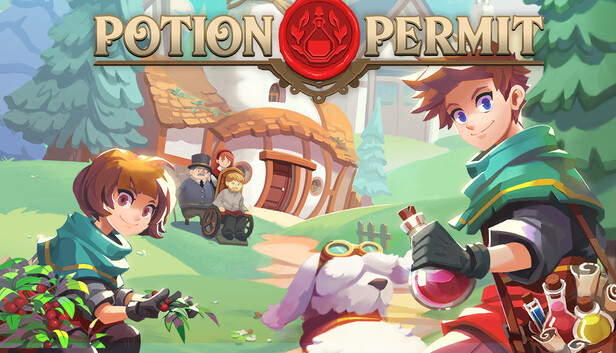
The Steam Deck Verified game mixes town life and potion-making with real-time gathering and combat. It's strictly single-player, making it a straightforward fit for an offline trip. Its optional DLC is cosmetic, with both paid and free items available.
For a larger 2D action world, Afterimage offers a lower-power option. At the default Medium quality and 100% render scale, Steam Deck HQ measured 9-10.5W. Switching to Very Low quality and 90% rendering resolution reduced the measured draw to 7-9W, with a projected runtime of about five hours.

The source doesn't identify the Steam Deck model for that projection, so don't treat it as an LCD- or OLED-specific result. Afterimage is a Steam Deck Verified, single-player action adventure with real-time platforming and Metroidvania-style combat.
Ooblets suits a relaxed trip with its mix of farming, creature collection, and turn-based card-driven dance battles. Steam Deck HQ's battery-focused preset generally held 40 FPS, drew 7-10W, and produced a projected runtime of four to four and a half hours.
To reproduce that setup, use 40 FPS at 40 Hz, a 5W TDP limit, an 800 MHz GPU clock, and Simple graphics. The Steam Deck Verified game is single-player and has full controller support, so there are no multiplayer or input complications to plan around.
Start with Balatro if measured efficiency and quick solo runs matter most. Stardew Valley better suits players who want a long-form game with varied activities, while Vampire Survivors delivers more immediate action. Choose Potion Permit, Afterimage, or Ooblets if you'd rather copy a battery-focused preset; Afterimage trades image quality for lower draw.
For any of these games, lowering brightness, turning off wireless features you don't need, and choosing a sensible frame cap may help. Check the wattage shown in the Steam Deck performance overlay during your own play session, since scene complexity and device condition can move the result away from a published test.
0 개의 댓글:
댓글 쓰기